
Dies ist die englische Übersetzung, lies den ursprünglichen Artikel hier!
New country, unfamiliar language, a head full of questions: The buddy program at Martin Luther University Halle-Wittenberg (MLU) brings international students and local students together – and makes arriving just a little less overwhelming.

Photo: Tom Roeloffzen
It’s 1 October 2025. Denise is standing on the platform at Halle’s main station, waiting for someone she has never met before. When the train pulls in, people spill out onto the platform. One of them is Giuseppina – Denise’s tandem partner. Normally, Giuseppina studies philosophy in Naples. For the next six months, though, Halle will be her new home.
As she steps off the train, suitcase in hand, Denise spots her right away. “I saw her with her luggage and thought: That’s my girl,” Denise says, laughing. The two had let each other know what they’d be wearing beforehand – just in case – so they wouldn’t miss each other in the crowd. “We introduced ourselves again,” Denise recalls. “We hadn’t actually met in person before.”
A program that opens doors
Denise and Giuseppina didn’t meet by chance. They were matched by the International Office at MLU. The principle behind the buddy program is simple: At the start of each semester, staff pair incoming international students with MLU students – the so-called buddies. Anyone who wants to become a buddy needs to be at least in their third semester and have German at C1 level. When matching, the team considers factors such as gender, degree program, and language skills. The aim is clear: Buddies are there to make it easier for international students to find their feet in Halle – answering questions about how to navigate their studies, helping with paperwork, or taking care of practical matters like picking up dorm keys.
Lucky Charm from Naples
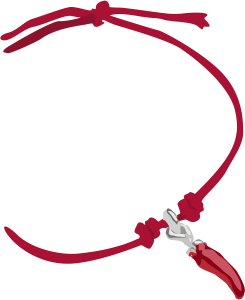
Those keys, for instance, can only be collected from the dorm caretakers during specific opening hours. Because Giuseppina’s train arrived late in the evening, Denise had already picked up the key in advance so everything would go as smoothly as possible. Before they headed to the dorm, though, there was time for a small gesture. “I brought her a lucky charm from Naples,” says Giuseppina. “It’s a little chili pepper.” She wears the same charm on her bracelet.
“Proof that my buddy is real”
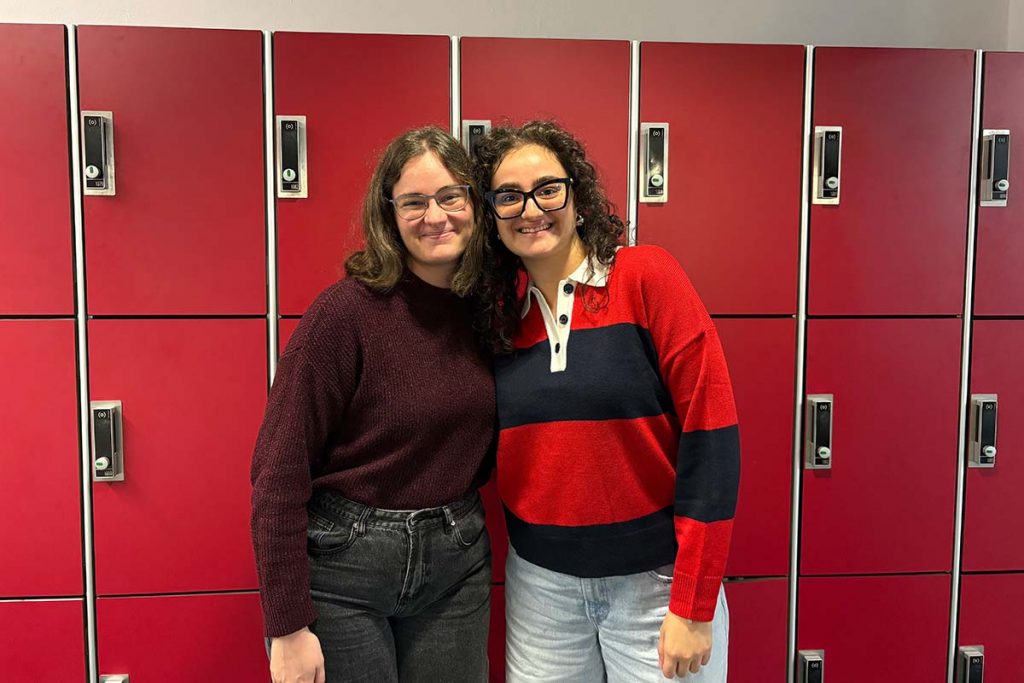
Photo: Leonie Brommer
At first, Giuseppina didn’t know much about the buddy program. “I got an email telling me who my buddy was, and then we started writing on WhatsApp,” she explains. The first selfie they took together on the platform went straight to her mother. “As proof that my buddy is a real person,” she jokes. In Italy, she says, there’s nothing comparable: “I think we should have something like this as well, because it’s very helpful for Erasmus students like me who don’t speak German.” Coming to a new country is anything but trivial.
“It’s so difficult to arrive somewhere where you don’t know anyone and don’t speak the language – it’s really hard,” says Giuseppina. “You need someone who shows you how things work.” In those first days, when homesickness hit hardest, Denise was particularly important. Still, Giuseppina didn’t come to Germany entirely alone. “I came with a friend – her name is Isabella. I met her in the Erasmus WhatsApp group.”
By now, Giuseppina has built up a small network. Together with other students, she has already taken trips to Dresden, Weimar, and Leipzig. Many of them are also from Italy and, like her, study philosophy in Halle.
Bonding Moments
Denise knows from her own life what it means to arrive in a foreign country. During her time abroad in the United States, she also signed up for a buddy program – but the experience was disappointing. Over the course of five months, she met her assigned buddy exactly once. When she returned to Halle and learned that MLU had its own program, her decision was made. “I thought: Okay, I can do better than that,” she says. For Denise, being a buddy means more than just answering a few questions. “You have to be aware that things can be really challenging for incoming students,” she explains. “If you’ve never been in a similar situation yourself, it’s even more important to keep in mind that you’re this person’s support – and often their very first point of contact here.”
Since their first meeting, Denise and Giuseppina have tackled more than just bureaucratic tasks together. “We went to buy an adapter and we’ve been to the cafeteria,” Denise says. “And we walked a lot,” adds Giuseppina with a grin. Their to-do list for the coming weeks is already growing. They want to go to a Saale Bulls game and cook a traditional German dinner together: rouladen with red cabbage and dumplings. Even though they haven’t known each other for long, both have already taken a lot from the exchange. “I’m improving my English with her and I’ve even picked up a few words in German,” says Giuseppina. Denise nods: “And we still have plenty of time to keep learning from each other.”
Translation: Mika Stolz