
Dies ist die englische Übersetzung, lies den ursprünglichen Artikel hier!
| Notice The following text includes discussions of toxic beauty ideals, disordered eating habits, and passing on body hatred and criticism within families. |
My mother has taught me a lot: how to whip up pre-made sauces, how to effectively use your tooth brushing time by exercising, and, above all, how to hate your own body with surgical precision.
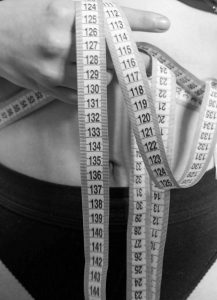
Photo: Michelle Ehrhardt
Mothers are formative figures in their daughters’ lives, usually from early on. Quite often they serve as role models, even without wanting to, or noticing. This can indeed become problematic: for instance, when you observe from a young age how mothers keep their portions deliberately tiny or if they talk poorly about their own body and a lot about calories and fat. Food becomes something you must earn through sport and discipline, but above all, suffering – and something that is always being commented on.
Like many women, I have inherited this difficult relationship with food and my body from my mother. Her stern face and critical remarks were – and still are – impossible to escape. Phrases like “Can’t we go without pudding?”, “Try to keep an eye on yourself” or “You’ve really chubbed up” are quite hard to shake off and leave a lasting impact. I regularly get to hear Kate Moss’s most famous quote, “Nothing tastes as good as skinny feels”, and as a child, there was no choice but to follow any diet my mother tried.
Grow Up, Just Don’t Get Big
I was raised in a paradoxical state between binge eating, diets, and exercise craze. Comments about my body started early on. The first time it happened, I was nine or ten and had just returned home from an extensive lunch at my grandma’s. I wore my favourite dark blue t‑shirt that fit a little tighter around my belly. My mother looked up as I greeted her and her eyes instantly grew wide. “You’ve really tucked in, haven’t you? You need to be more careful!”, she criticised, touching my belly. Her look of reproach upon my body hit like a slap in the face. A tap on my child belly, a brief remark, and that beloved dark blue t‑shirt had gone from being a garment to evidence of my excess. It moved all the way to the back corner of my closet to disappear forever in its depths – accompanied by my self-confidence.
My mother’s own body was another object of her constant criticism. Every morning she would step on the scale and immortalise the result meticulously on millimetre paper on the fridge. In a wavy pattern, the dots were connected to a graph of her failure. At a glance you could track how her weight changed and when the next diet would be due. Interval fasting, low-calorie or nothing but smelly cabbage soup, which according to my mother would be good for the whole family – a culinary threat hovering over the cooker like a bad omen. If Kate Moss’s mantra of slenderness becomes the mealtime prayer, the clear broth suddenly tastes like moral superiority.
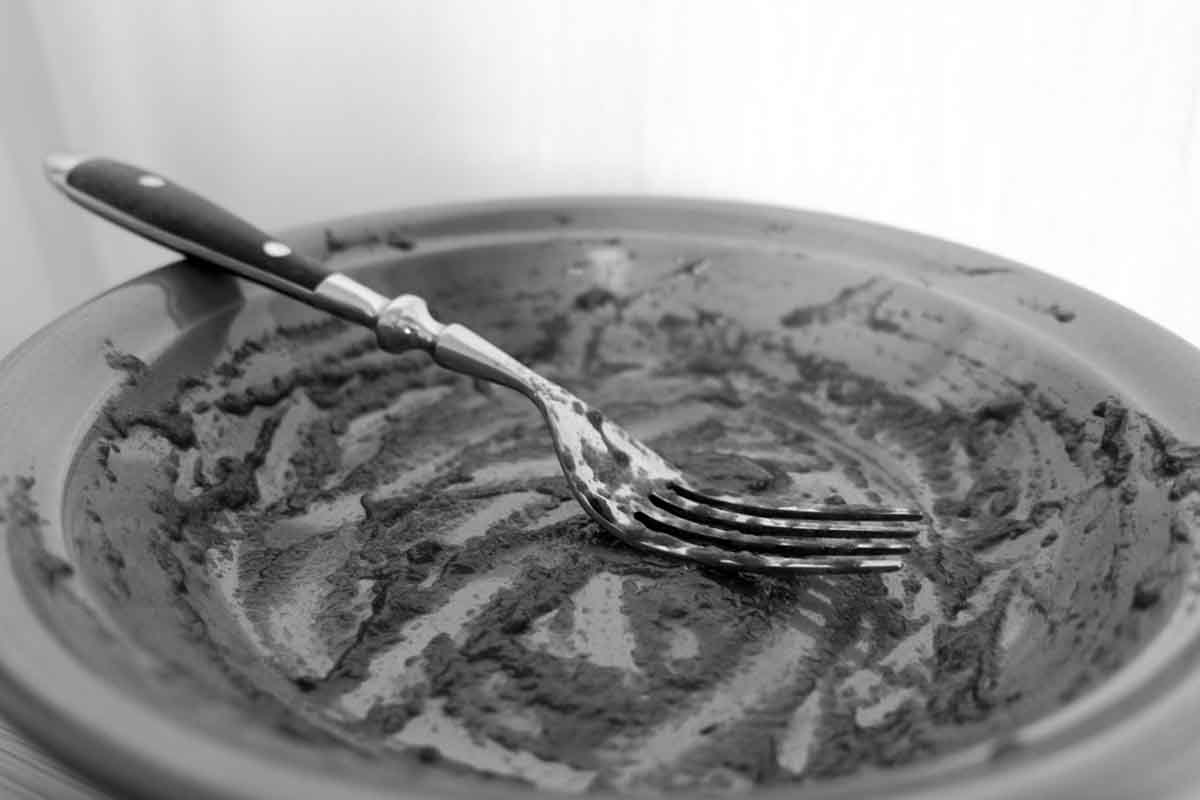
Photo: Michelle Ehrhardt
However, should you unsurprisingly still feel hungry after a serving of cabbage-flavoured clear broth, you’ll be advised to drink a glass of tap water. Then brush your teeth straight away and while you’re at it, ideally do some standing exercises. According to my mother, this should make the hunger vanish immediately. Just don’t lose control. Hunger is not a need but a character flaw.
Skinny Teenage Bodies
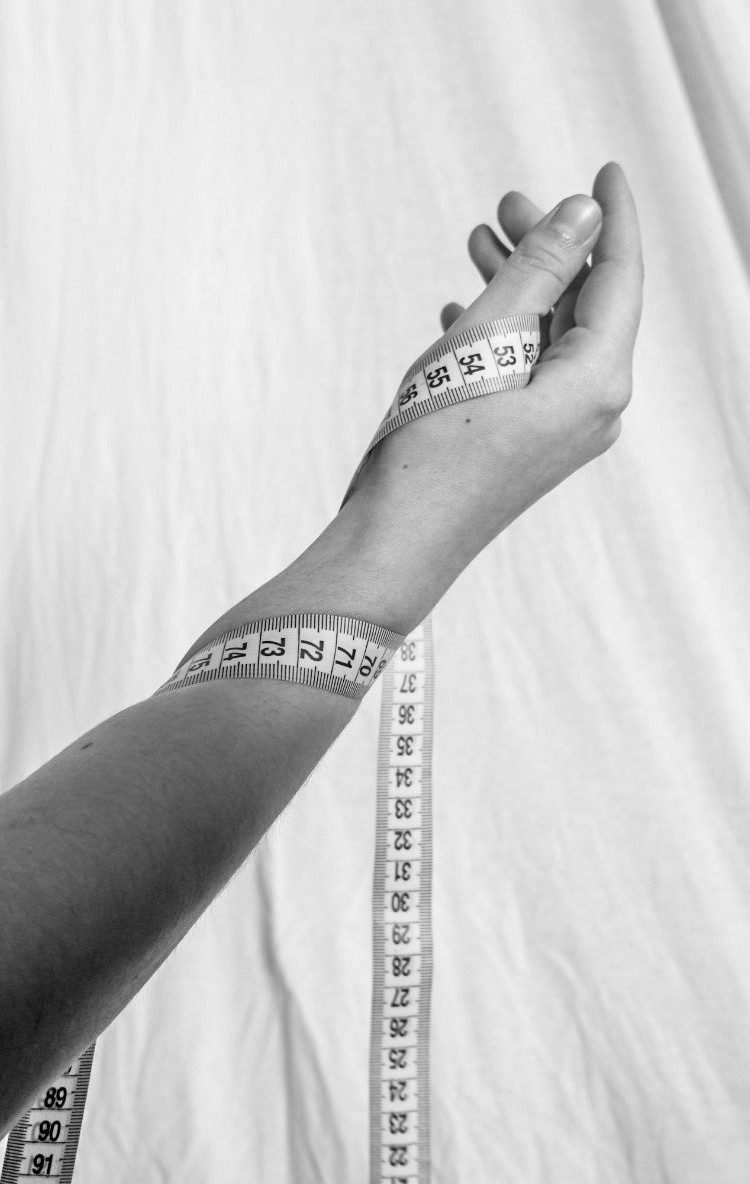
Photo: Michelle Ehrhardt
This philosophy hit extra hard in my teens. Maternal neurosis was disguised as care while I had already internalised all of my mother’s problems, and made them my own. My friends were much the same. Us teenage girls were sitting in our rooms and didn’t compare our homework but the slimness of our forearms and thighs. Whoever had eaten the least won the admiration and respect of all mothers. The others were all asked to take a page out of her book, even if that volume had already become quite thin. The only hobby we had was slimming down.
And so we jumped collectively into the abyss – this is not a subjective perception but measurable harm. Research has shown that the number of eating disorder treatments has gone up dramatically in recent years – by nearly 50 percent between 2019 and 2023. We’re not talking about a “phase” here but an epidemic of self-denial. If nearly one in three girls at the age of 14 displays conspicuous eating habits, this is no longer an individual issue. This is systemic failure.
The mother of a friend talked her into nasal surgery at 16. Under the guise of motherly care, one girl received an absurdly expensive juice diet along with some designer bags for her birthday. Another teenager got a boob job and had her benign moles lasered off. The rest, who couldn’t afford any of these things, simply ate less and less and puked more and more. Our mothers were proud and we tried to be slim at all cost. Their fears, which had quickly become our own, shaped us thinner and thinner.
When the feeling of hunger became unbearable, surrender ensued. Our spirits broke. We just gorged ourselves. The void had to be filled. And again, my mother was setting the example for me. A full jar of Nutella, an entire bar of chocolate, more and more slices of cake, cut larger and larger, and on top of that a whole bag of gummy bears. Once we started, there was no holding back. We practised binge eating straight out of the textbook. We rewarded ourselves. We punished ourselves. Until our emotions blurred together and all that was left was the hate we harboured for our bodies. I got to a point where I lost my faith in anything and anyone, except for that bar of chocolate.
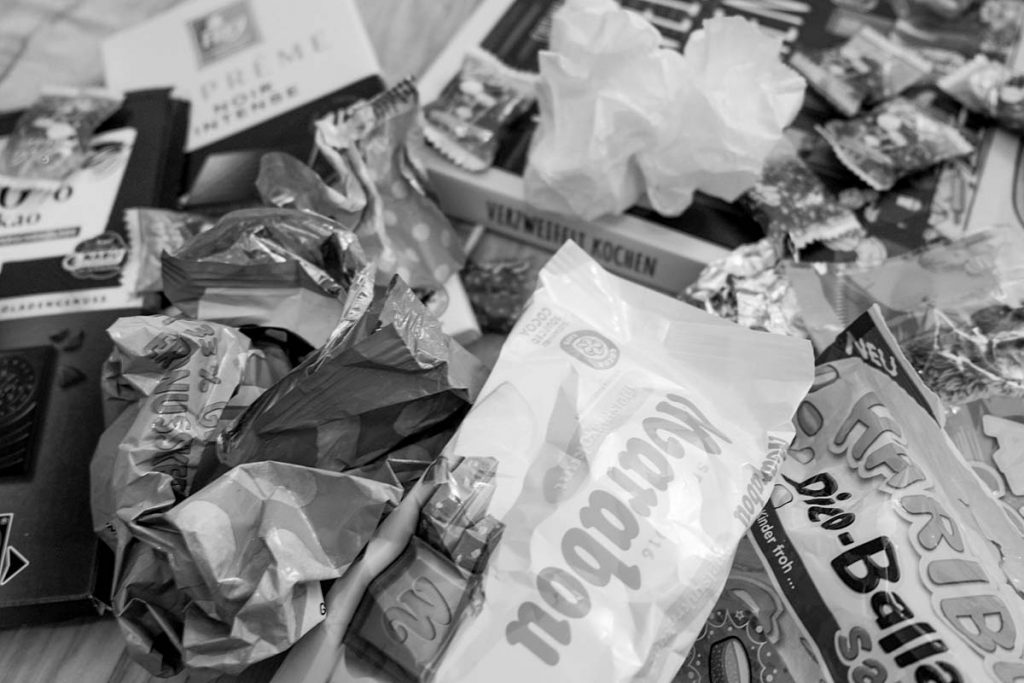
Photo: Michelle Ehrhardt
After these episodes of pigging out I would feel sick, bloated, and like I had been filled with a sticky mass from top to bottom. I was hardly human any more but rather a vessel for industrial sugar fats. In place of blood, gooey slime flowed through my veins.
Patriarchal Brainwashing

Photo: Michelle Ehrhardt
You would think our mothers were simply cruel, but the truth is even sadder: They are the diligent soldiers of a cruel system that has been suggesting to them for centuries that their “market value” will rise proportionately to the visibility of their ribs. Patriarchy loves starving women, because while they starve, they have no energy left for revolutions. Society’s fixation on slim female bodies is not an obsession with aesthetics, but with obedience. If they are busy doing whatever it takes to fulfil beauty standards, they have no time to resist. Our mothers were controlling us not out of malice, but because they had learned that a disciplined body is the only currency that will grant a woman any recognition in this misogynist world. They tried to teach us how to survive in a world that would love to see us shrink to invisibility.
The first step towards healing is probably not self-love – that would be way too much to ask after all those years of mind control. A more real step would be rage. Rage against a system that puts us off food to keep us down. I am now trying to refuse to carry on my mother’s heavy legacy. I don’t want to be invisible! I want to be sated!
Translation: Konrad Dieterich