
Dies ist die englische Übersetzung, lies den ursprünglichen Artikel hier!
Wham-bam and into the bag it goes – a hastuzeit print issue can be put away quickly. Whether it’s articles for long train journeys or puzzles for boring lectures, there’s really something for everyone. But many are unaware of the process and who’s behind the creation of your favorite magazine.
“I do journalistic work because I like to figure out and learn about new things”, Ellen “Elmo” Helmecke explains with a smile. Elmo, like so many others, had originally found their way to the hastuzeit via the ASQ module. The hastuzeit considers itself a participatory medium, so each semester, around 20 students are offered the chance to take a peek behind the curtain – while also earning themselves some nifty ECTS credits. It also counts an editorial staff of around ten students as well as a larger number of freelance contributors. Established in 2005 by students for students, the ever-changing editorial staff has published north of 100 different issues so far. But the creation process of a hastuzeit involves so much more than just the penning of articles.
It Starts with an Idea
Ranging from “#MLUnwichtig” (“#MLUnimportant”) over “Brotlose Kunst” (“Unprofitable Art”) to “Wie schön” (“How Pretty!”), there have been many featured topics in hastuzeit’s history. Some were planned long in advance; though most are created rather spontaneously – as is usual for journalistic outlets. A hastuzeit print issue encompasses three categories: The titular topic, “hastuUni”, which covers articles related to all things university, and “hastuInteresse”, which contains a colorful mix of texts that did not fit into the first two categories. Which article belongs to which category is often only just decided at an editions’ final editorial meeting.
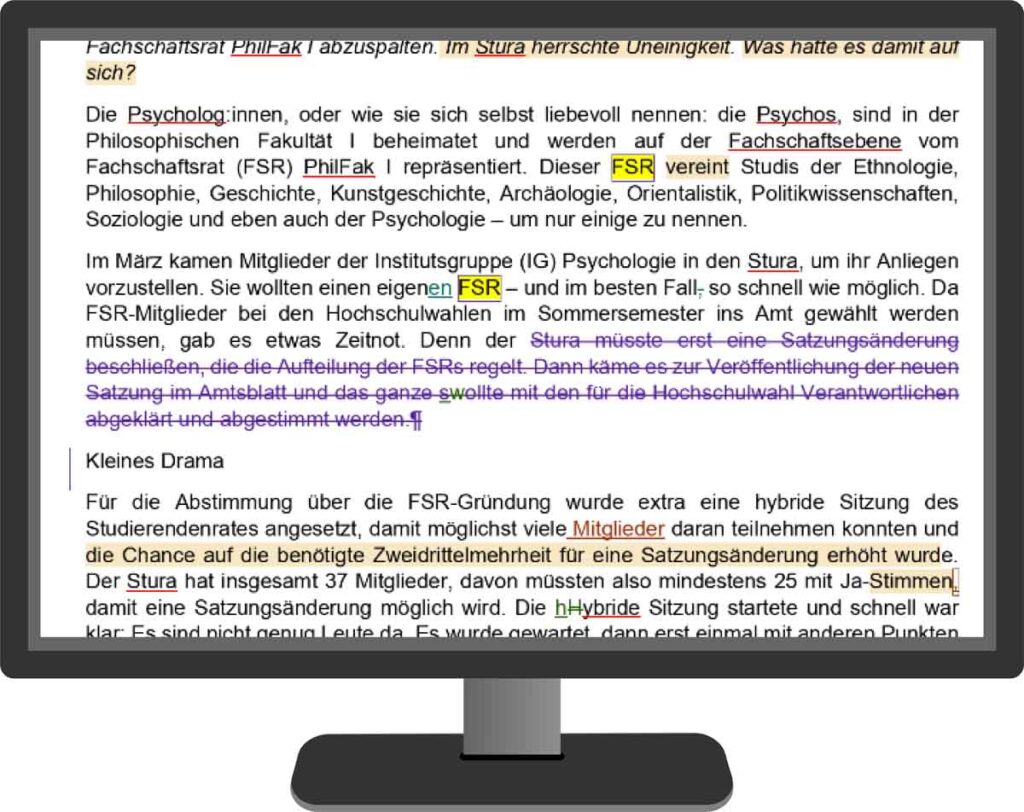
The work on an edition and its articles usually starts months in advance before you can find it displayed all around our university. The hastuzeit journalists bring, pitch, and discuss their article ideas in the weekly editorial meetings. Then they look for input, interview partners, attend press conferences and events.
For some, their work at the hastuzeit only begins where journalistic penmanship ends. Like for Julian Herold, head of the quality control department. He is in charge of making sure that every article goes through two editing cycles, checking their grammatical, stylistic, and factual correctness. “Looking over really, really well-written articles and only having to add some final polishing touches, that’s probably the most fun for me”, Julian says about his department. He – in very close communication with the editors-in-chief – is also responsible for the translations as well as for deciding whether articles make it into a print edition or become online exclusives.
Picturesque and Fine Print(s)
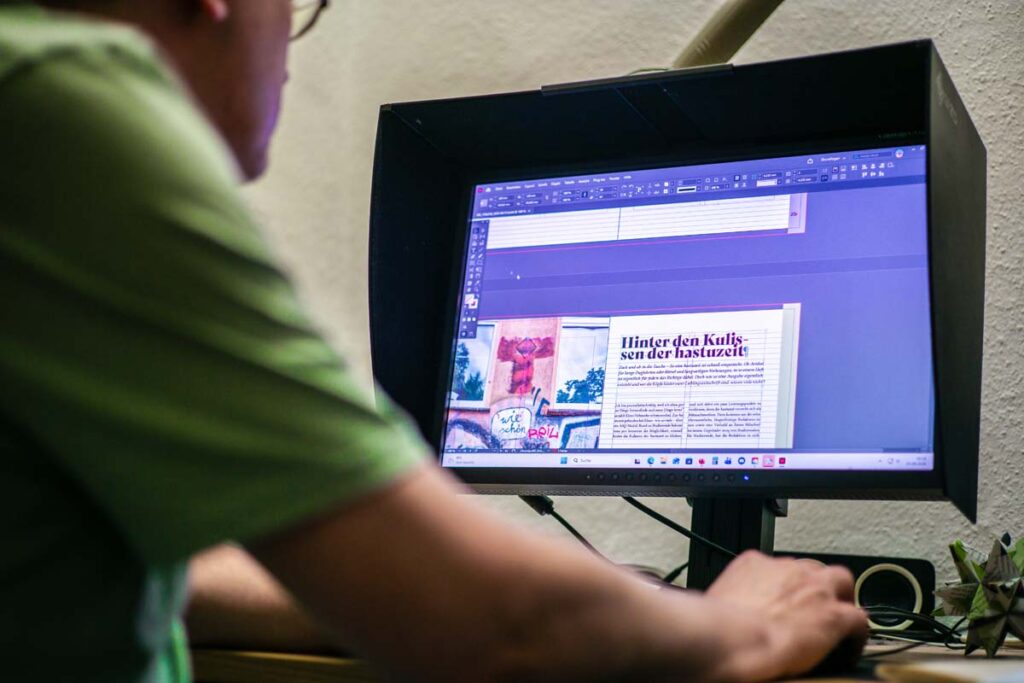
Now the articles are finished being written, edited and in some cases translated. In the best case, the authors have also already figured out the visual accompaniments of their article. Here, they brainstorm the best suited way to illustrate their text; oftentimes on their own, but also sometimes during the editorial meetings. Afterwards, they either procure the images on their own or ask illustrators at the hastuzeit. Many members carry a lot of experience in photography or illustrations and are thus able to make the authors’ vision a reality. Depending on the type of article, it might be wise to also use graphics or maps. In many cases, head of department Konrad Dieterich creates those himself. He is also responsible for the layout of the print issues. He transforms the collected pile of text documents and image files into print-ready editions, partly in direct communication with the authors, should individual wishes arise. At the end of this process a preliminary PDF file has been created, which is then combed through in search for potential mistakes by the editors-in-chief as well as the head of department for quality control. Once all smaller and bigger mistakes have been found and corrected, Konrad sends the print file directly to the print house.
Out of the Office; into the World
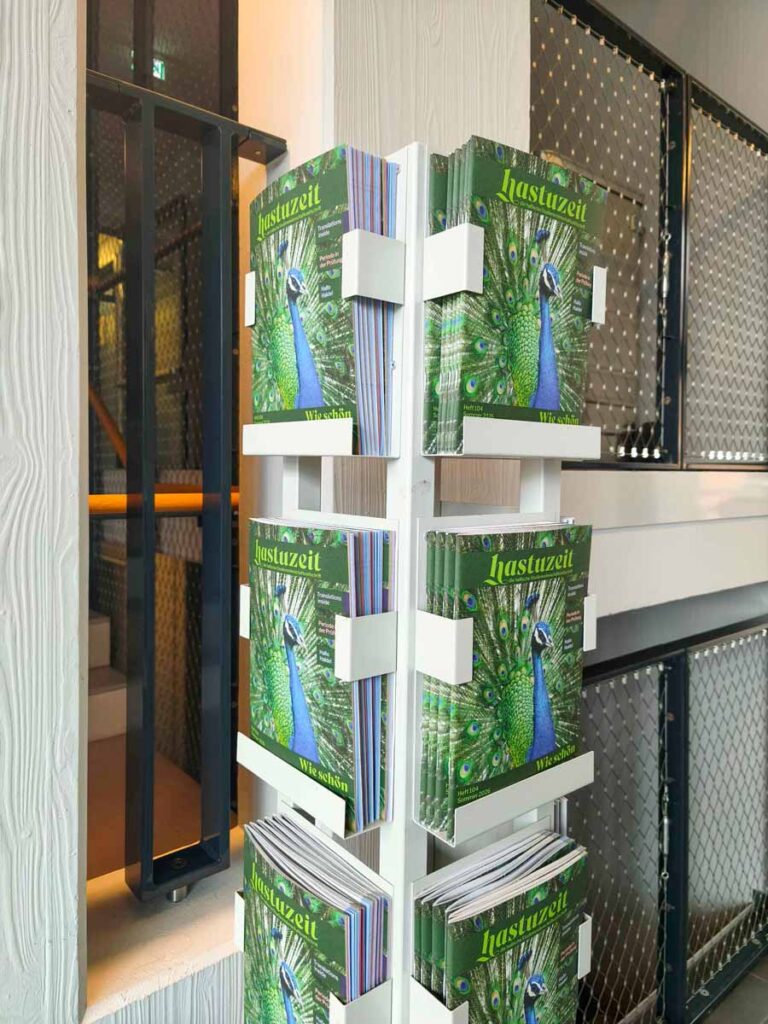
Hot off the press, the brand new issues are delivered to the hastuzeit office in the Stura (student council) building, where their distribution starts. That department is led by Melissa Andrae. “My main job is delivering the magazines to the students’ dorms and overseeing the distribution to the various locations at the campuses.” Not only does she keep track of how many magazines are to be distributed at which university buildings; she also organizes refills of the showcases and displays, should there be a need. “When I see students on their way from or to a lecture or seminar stop in front of the display and take a magazine, that’s my favorite part of the job”, she explains.
But the issues and articles are not only available in print but also digitally at hastuzeit.de. As head of IT, Elmo is responsible for uploading these. That process is not something they do entirely on their own – just like the other department heads don’t – but together with students from the ASQ module. But that’s not all: the hastuzeit’s cloud, the website’s design and everything else related to digital infrastructure lands on Elmo’s desk: “Basically, my job is making sure that everything in the background runs smoothly.”
The subsequent promotion of the magazine and online articles falls to the department of public relations. Co-headed by Franziska Ripke and Michelle Ehrhardt, they look after the creation of Instagram posts, ordering of promotional material, and designing posters. “We struggle a bit with the fact that many people simply don’t know that we exist”, Michelle explains, “and it’s my job to change that.”
What You See Is What You Get
At the culture department, Leonie Brommer is responsible for filling the hastuzeit’s cultural calendar with various events in Halle and promoting them on the website and on Instagram. “We promote one-off lectures, festivals like the Händel festival, opening nights at the theaters and cool new initiatives with the aim to organize events in Halle, to name a few”, she explains. Leonie also visits some of these events herself to later report on them. Furthermore, the hastuzeit is regularly invited to take a peek behind the curtain of cultural events, like rehearsals and the season previews of the Bühnen Halle. “The most fun parts are getting to bring the topics I’m most interested in into the editorial conversations and creating cool encounters.”
Johannes Wingert leads the department for university politics. He observes and reports on the work of the Stura, Academic Senate, and Student Faculty Councils. For this, he regularly attends the Student Council meetings, works through meeting minutes and coordinates which authors get to grapple with which topics of university politics. “My main business is with the Stura. The timing of the senate meetings simply doesn’t mesh well with a student’s routine.” He regularly feeds the hastuzeit news ticker with topical reports – for example by publishing reviews of the Student Council meetings.
Translation: Ellen Helmecke